|
 Over the past few decades, the Asia-Pacific region has transformed from a relatively overlooked area into a geopolitical hotspot and a major driver of the global economy. Its significance in world politics, economics, and other spheres cannot be underestimated. However, the Czech domestic debate remains markedly Sinocentric, often placing less emphasis on other key players and associated topics within the region. Over the past few decades, the Asia-Pacific region has transformed from a relatively overlooked area into a geopolitical hotspot and a major driver of the global economy. Its significance in world politics, economics, and other spheres cannot be underestimated. However, the Czech domestic debate remains markedly Sinocentric, often placing less emphasis on other key players and associated topics within the region.
This focus on China is understandable. China is a global economic powerhouse with increasing geopolitical influence and serves as a central actor in various multilateral frameworks — particularly economic and security-oriented ones — such as the Regional Comprehensive Economic Partnership (RCEP), the Belt and Road Initiative (BRI), or the Shanghai Cooperation Organization (SCO). Taiwan, meanwhile, has emerged as a global hub for advanced technologies, especially artificial intelligence (AI), which is powering the current stage of the Fourth Industrial Revolution.
Nonetheless, this approach is also limiting, as it overlooks other significant actors. These include established middle powers and some of the world’s most advanced economies, such as Japan and South Korea. Their leadership in technology, innovation-driven cultures, emphasis on foreign investment, and — in the case of South Korea — deepening strategic cooperation with the Czech Republic in energy, make them highly relevant non-European partners for Czech business and institutions alike.
It is also crucial to consider the growing importance of the region’s emerging leaders — often labeled “Asian Tigers” or “Asian Dragons” — such as Indonesia, Malaysia, Vietnam, and other ASEAN members. These countries are actively shaping the global stage through their economic and geopolitical trajectories. India stands out even more prominently, having positioned itself in recent years through its “Act East” policy and participation in forums like the G20. India is increasingly seen not only as a voice of the “Global South” but also as a key pole in the emerging multipolar world order.
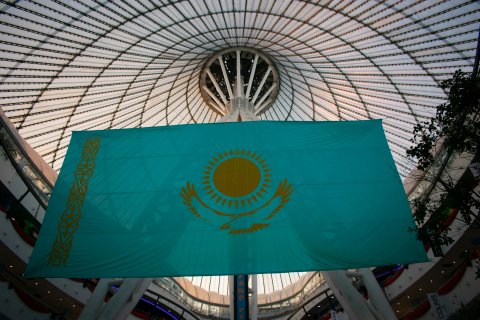
We must not overlook Central Asian countries, particularly Kazakhstan. With their “multi-vector” foreign policies (also referred to as “all-azimuth” strategies), they maintain active relations with Russia (their so-called “near abroad”), participate in China’s Belt and Road projects, and engage with EU states. Their strategic location as transport hubs and rich deposits of critical raw materials make them vital global actors. All these countries are dynamically developing economies that are benefiting from Western strategies like decoupling, derisking, and “China Plus One” — presenting new business opportunities for European nations, including the Czech Republic.
The activities of the Center for Asia-Pacific Studies (CAPS) are therefore focused on understanding the political and economic complexities of this region — including, for example, so-called “bamboo diplomacy.” Our goal is to create a top-tier research center while also engaging in educational outreach, shaping public discourse, and providing expert support to Czech public institutions and businesses. Practical applicability and alignment with Czech national interests are our key priorities. Ultimately, the Center aims to contribute significant value within both the Czech and global arenas.
Jan Železný, Ph.D., Executive Director
|