Dr. Roman Kodet Spoke About the Challenges of Japanese Geopolitics

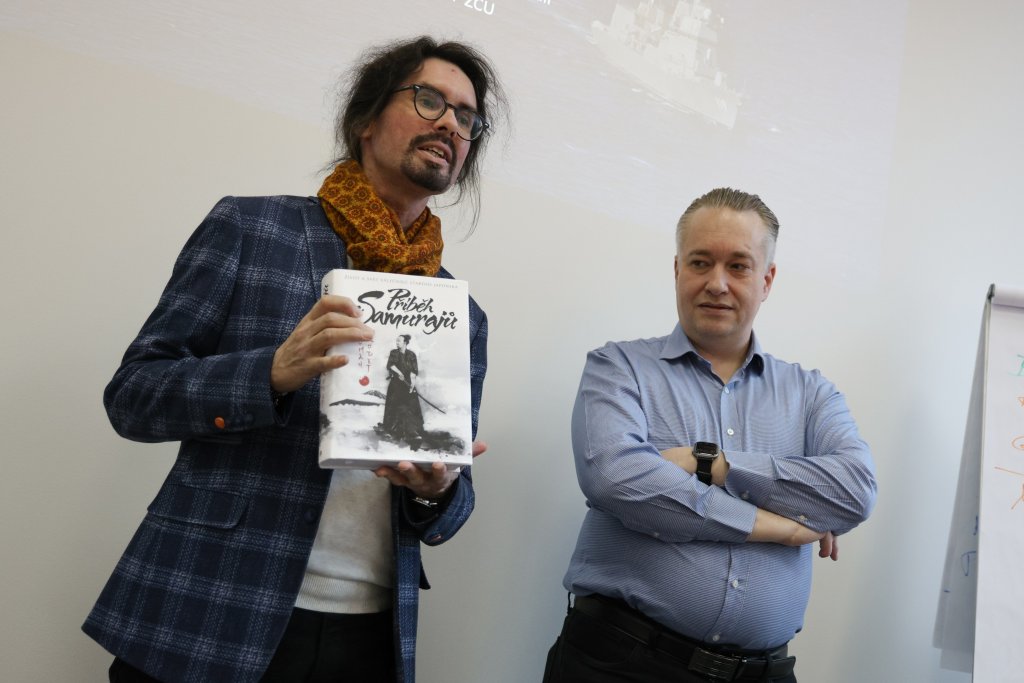
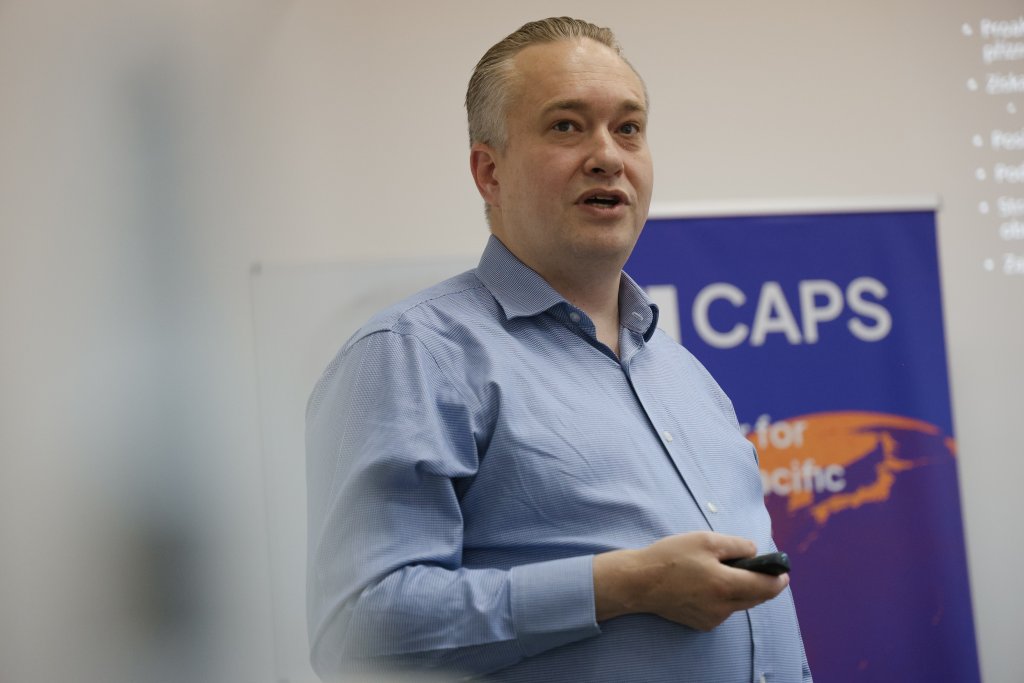
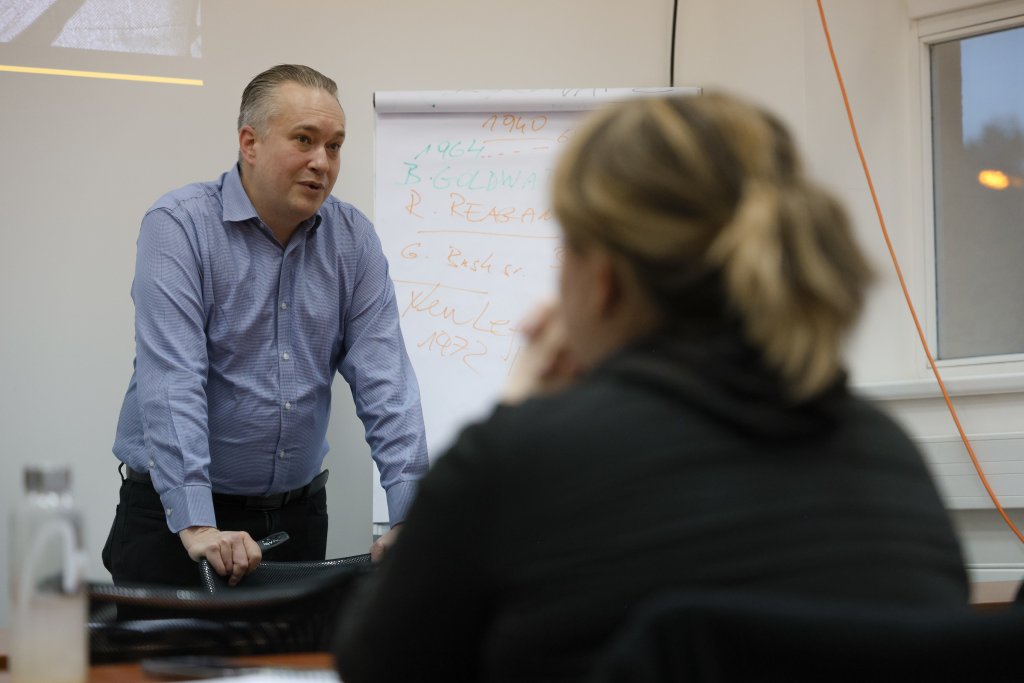
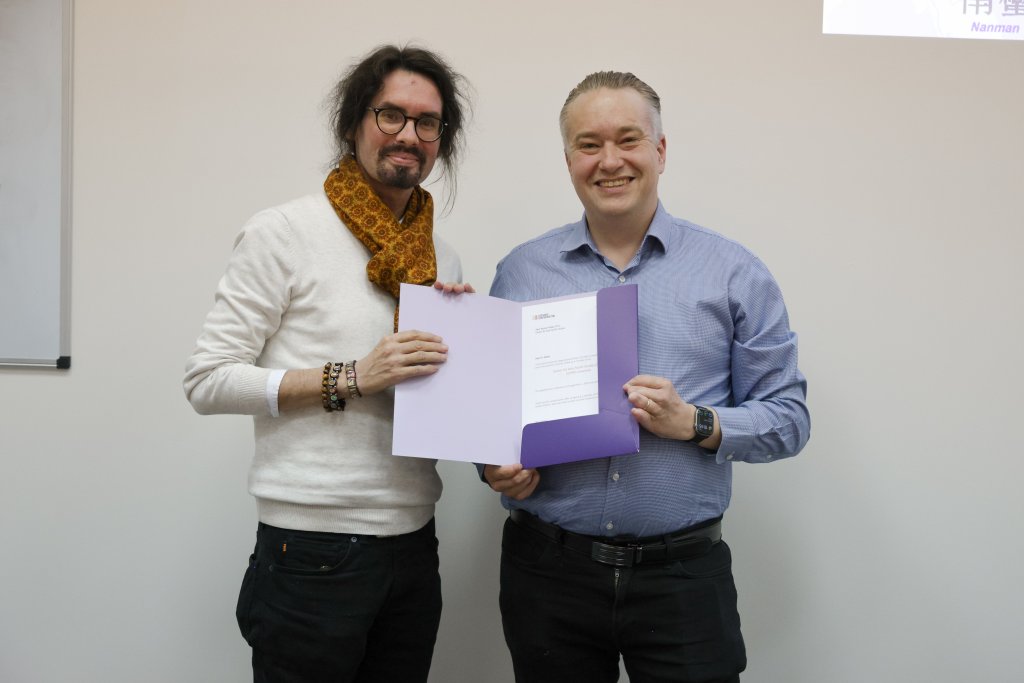
On Wednesday, March 11, a lecture titled “Challenges of Japanese Geopolitics in Historical Context” took place at CEVRO University in Prague. The main guest of the event was Dr. Roman Kodet, a historian from the Faculty of Arts at the University of West Bohemia in Pilsen and a Senior Fellow at the Centre for Asia-Pacific Studies (CAPS). In his presentation, he focused on the deep historical roots of current security challenges in the Indo-Pacific region.
In his lecture, Dr. Kodet analyzed the complex dynamics of relations between Japan and its neighbors, particularly South Korea and China, placing them within the broader framework of a sinocentric worldview and Confucian hierarchy. He paid special attention to the transformation of Japan’s security policy, which—under the pressure of a changing global environment—is moving away from decades of restraint toward a significant strengthening of its own defense capabilities.
Dr. Kodet emphasized that the United States remains the key pillar of Japan’s security, providing the country with a nuclear umbrella. However, this partnership is undergoing a stress test, especially in the era of a second Trump administration. Japan finds itself in a paradoxical situation: Donald Trump criticizes Tokyo for low defense spending, even though Japan’s armed forces are constrained by a constitution drafted by the United States after World War II. In response, the Kishida government committed in 2022 to a historic doubling of defense spending by 2030. Japan is increasingly aware that in the event of a conflict in Europe or the Middle East, U.S. assistance may no longer be guaranteed.
“Currently, we are witnessing a fundamental shift in Japanese strategic thinking. Japan is no longer speaking only about the linkage between the Indian and Pacific Oceans, but is beginning to perceive the global security architecture through the interconnection of three oceans, including the Atlantic—thereby actively bringing European partners into the equation. The alliance with the United States thus remains crucial, but it is being tested by pressure to increase defense spending to 2% of GDP and by uncertainty regarding American guarantees in future conflicts. Although Japanese society has traditionally been pacifist, growing threats are gradually leading to acceptance of the need to revise constitutional constraints and strengthen the military,” Dr. Kodet added.
The lecture also highlighted that, from a Eurocentric perspective, China is often emphasized as Japan’s primary challenger, while South Korea is seen as a natural ally of Tokyo. However, historical legacies and economic rivalry create barriers that are difficult to overcome. An interesting aspect is the historical dispute over hierarchy within the Confucian order, in which Korea traditionally viewed itself as culturally superior and closer to the Chinese center than Japan—an attitude that continues to shape mutual distrust.
The lecture was followed by a discussion with guests, focusing on the future of Japan’s defense industry, the prospects for exporting military technologies, and the potential impact of revising Article 9 of the Japanese Constitution on regional stability.
The event, organized by CAPS, once again underscored the growing strategic importance of Japan as a key actor in the Indo-Pacific and highlighted the Centre for Asia-Pacific Studies’ efforts to foster informed debate on the challenges and opportunities in one of the most important geopolitical regions of today’s world.