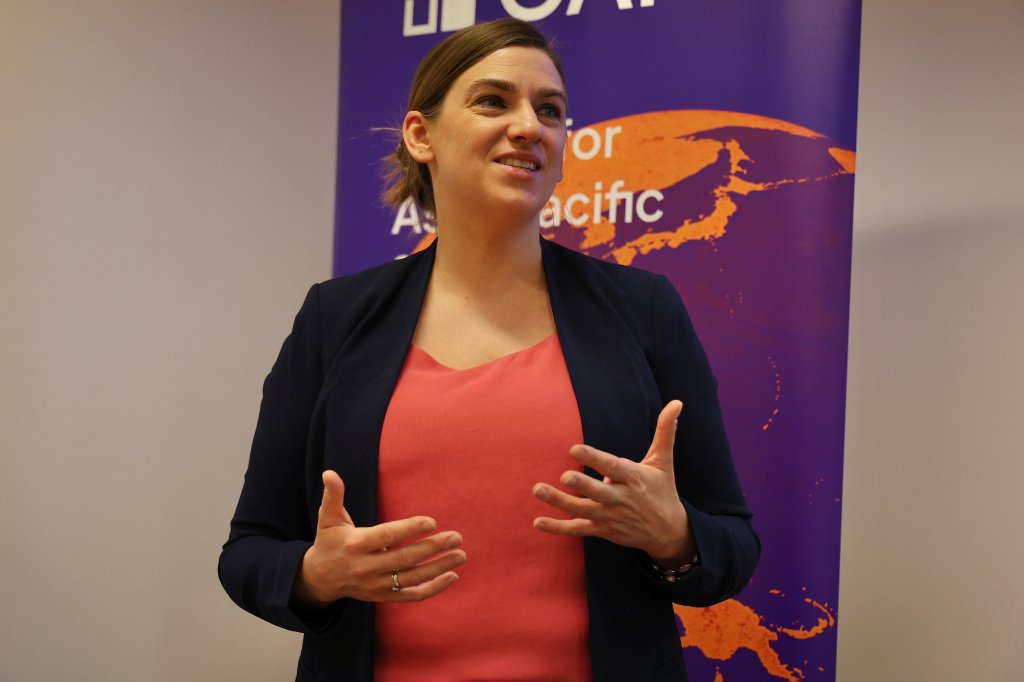
Dr. Elzbieta Pron delivered a lecture on the future of the EU’s Global Gateway in Central Asia at CEVRO University

On Monday, 23 February, a lecture entitled Central Asia as a Partner: Reality and the Future of the EU Global Gateway Initiative in the Region took place at CEVRO University in Prague. The main guest of the event was Dr. Elzbieta Pron from the University of Silesia in Katowice, an expert on China’s foreign policy and Central Asian politics, who visited Prague at the invitation of the Center for Asia-Pacific Studies (CAPS).
In her lecture, Dr. Pron analysed the evolving geopolitical context of the European Union’s Global Gateway strategy since its launch in 2021, placing it within the broader framework of great power competition and regional connectivity. Particular attention was devoted to the comparison between the EU’s Global Gateway and China’s Belt and Road Initiative (BRI), as well as to the changing dynamics of EU–Central Asia relations.
„Global Gateway is clearly a response to China’s Belt and Road Initiative. The main challenge in Central Asia is not the region itself, but the geopolitical consequences of Russia’s full-scale invasion of Ukraine, which disrupted infrastructure and limited connectivity options for both China and the EU. Interestingly, both initiatives now follow very similar paths, particularly through the Caspian corridor, and both emphasise digital and modern infrastructure development. The key difference lies in implementation: China operates quickly and pragmatically, while the European Union must follow stricter transparency and regulatory standards. This makes the EU approach more complex — and often less flexible — than China’s model,“ Dr. Pron emphasised.
„The differences between the European and Chinese approaches are not as fundamental as often assumed. Both focus on infrastructure and green energy development. China’s main advantage is geographic proximity, which allows for easier integration of transport and energy networks.For the EU, connectivity is more complex due to logistical constraints and the lack of direct borders. The key distinction lies in implementation: China tends to act more swiftly and pragmatically, while the EU operates within stricter regulatory and transparency frameworks. Central Asian states generally respond positively to both, though cooperation with the EU can be more procedurally demanding,“ she added.
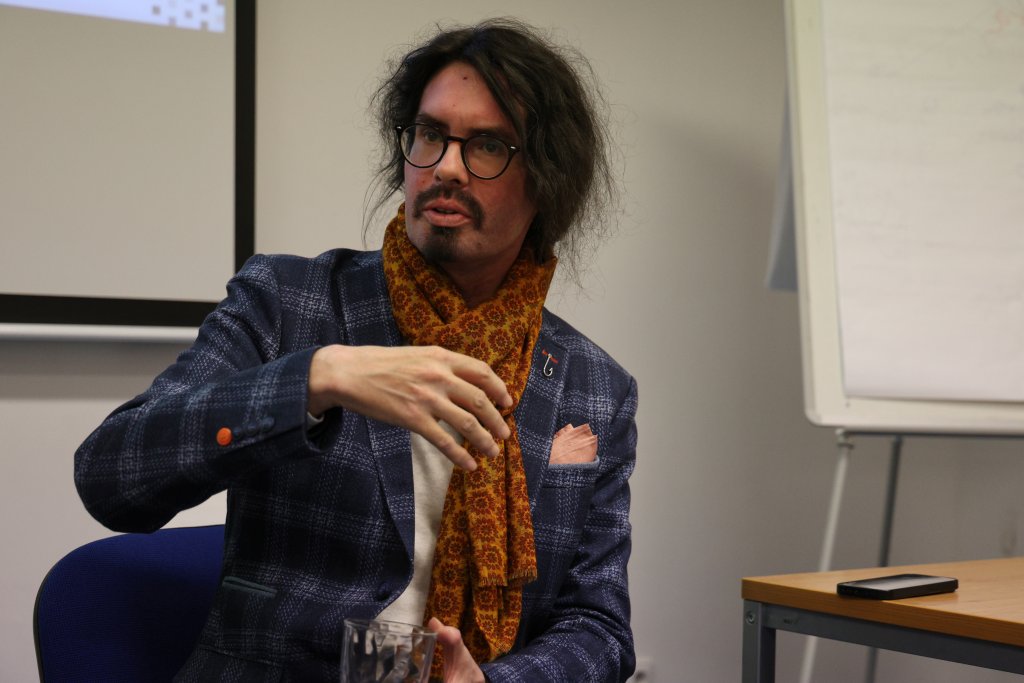
The lecture was followed by an expert discussion with students and faculty members, focusing on the future trajectory of EU–Central Asia relations and the measurable indicators of Global Gateway’s effectiveness in the coming years.
The event, organised by CAPS, once again highlighted the growing strategic importance of Central Asia in contemporary international relations and underscored CEVRO University’s commitment to fostering informed debate on global geopolitical developments.